
Augmented Reality
Augmented reality that stops thumbs mid-scroll
AR is the closest thing marketing has to magic — products that leap out of packaging, try-ons that remove purchase anxiety, campaigns people voluntarily share. We've been building AR since before it was a buzzword: browser-based WebAR that needs no app install, and deep native experiences on ARKit and ARCore.
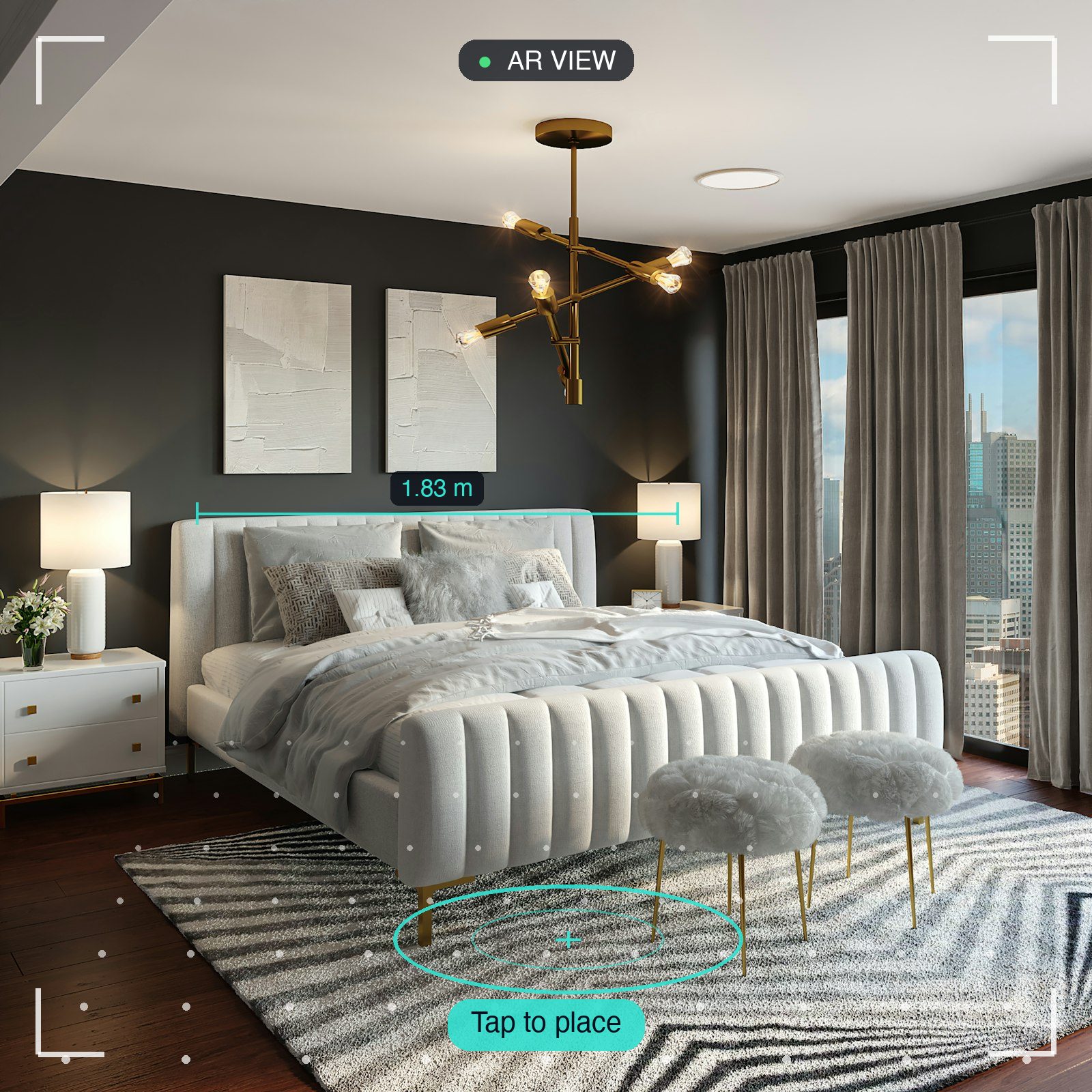
Over a billion phones are AR-capable today, and a customer scanning a QR code on your packaging can be inside a full 3D experience four seconds later — no app store, no download. We've built AR since the first ARKit and ARCore releases, which means the expensive mistakes are already behind us: we know what tracks reliably in a dim restaurant, what loads fast on a mid-range Android, and what gets shared instead of just demoed.
Every build is designed for a metric, not a wow: try-ons are measured on conversion lift, packaging AR on scan rates and dwell time, event AR on shares. You get the analytics with the magic.
The first decision
WebAR vs Native AR — which one is yours?
WebAR
Instant, in the browser- Opens from a QR code or link — zero install friction
- Perfect for campaigns, packaging, print & events
- Live in weeks at a fraction of native cost
- Reaches every modern phone, iOS and Android alike
Native AR (ARKit / ARCore)
Deepest quality, in your app- Centimetre-accurate placement & persistent anchors
- Occlusion, shared multi-user sessions, offline use
- Right for try-on inside your own app & industrial AR
- The choice when AR is a product, not a campaign
Rule of thumb: campaigns and packaging → WebAR. AR as a core product feature → native. We build both, and we'll tell you which in the first call.
Capabilities
What's included in augmented reality
WebAR — no app required
Scan a QR code, get AR instantly in the browser. The lowest-friction AR there is — perfect for packaging, print campaigns, events and product launches.
Product visualisation & try-on
Let customers place furniture in their room, try frames on their face or see a machine at real scale on the factory floor before they buy.
Image & marker tracking
Bring packaging, posters, textbooks and business cards to life — video, 3D and interactivity anchored precisely to printed material.
Face filters & effects
Branded face filters and effects for campaigns on Instagram, Snapchat and the web that get your brand shared for free.
Industrial & training AR
Step-by-step AR work instructions, remote assistance overlays and equipment visualisation that reduce errors and training time on the shop floor.
3D content production
In-house 3D modelling, optimisation and animation — we take your product from photos or CAD to AR-ready assets that load fast on mid-range phones.
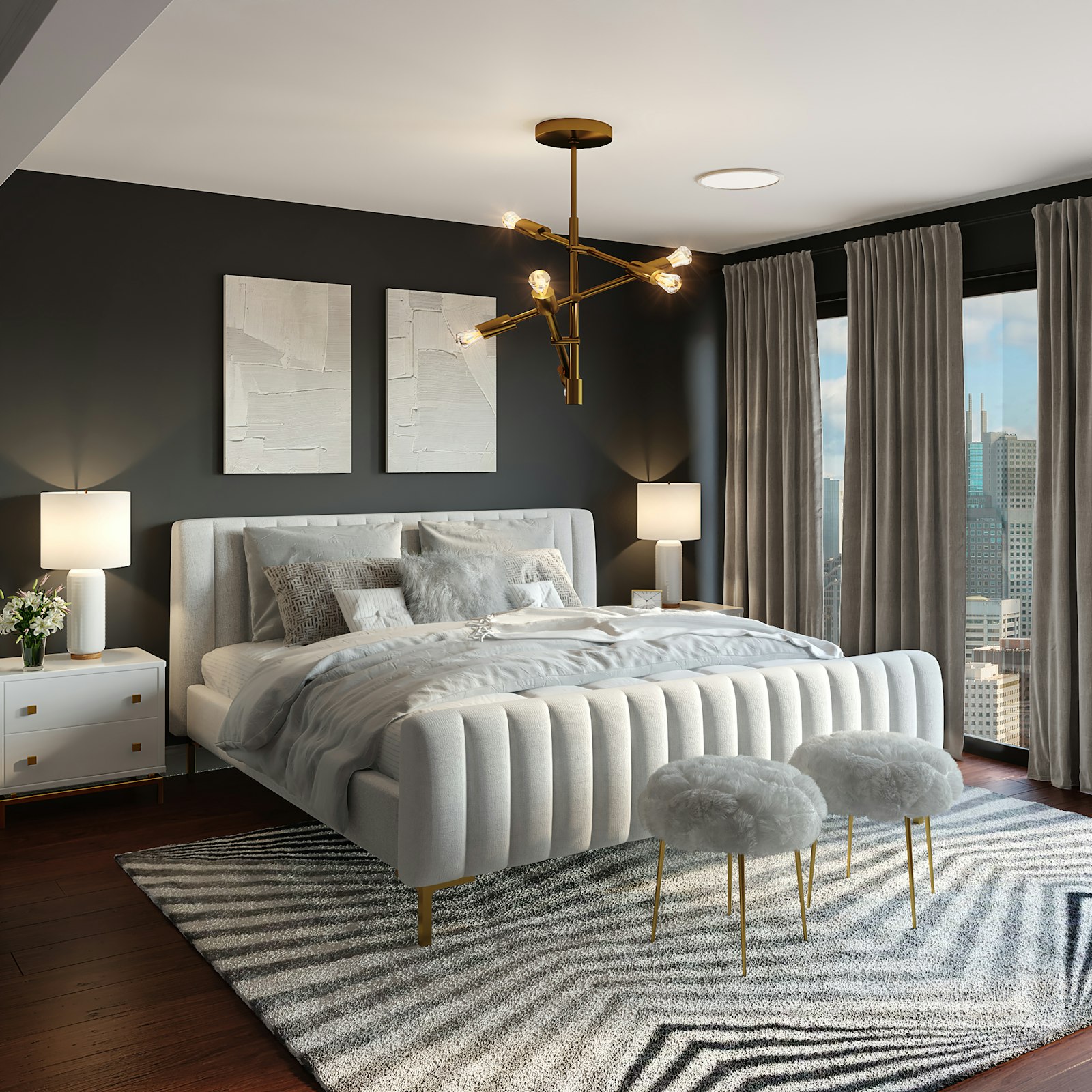
Photoreal 3D that sells the unbuilt
This render isn't a photo — and that's the point. We produce photoreal 3D of products and interiors, then place it in the customer's world through AR: furniture at true scale in their room, finishes swapped live, machines previewed on the factory floor.
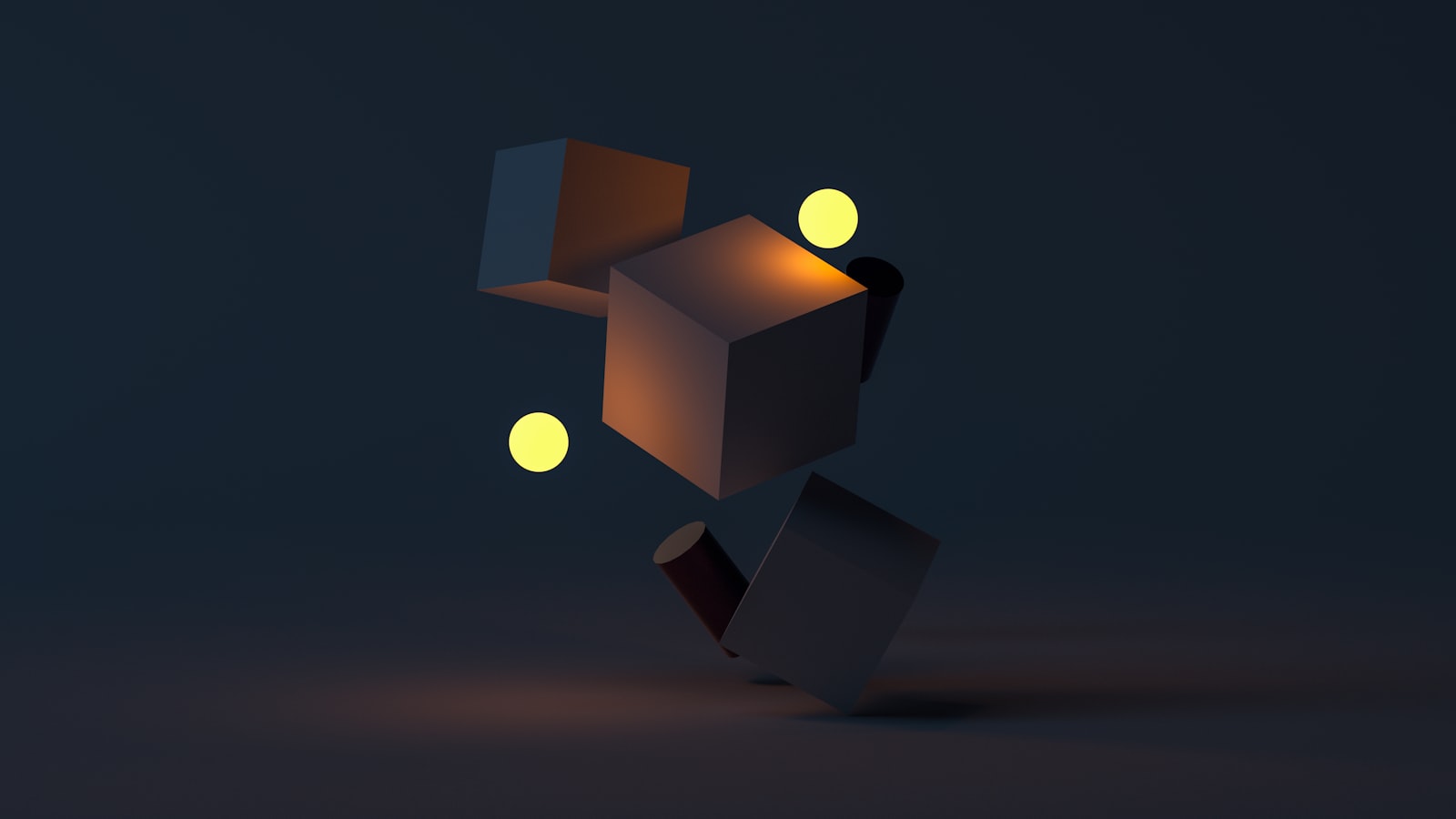
In-house 3D content pipeline
AR is only as good as its assets. From CAD files or product photos we model, texture, light and animate — then optimise relentlessly so experiences load in seconds on mid-range phones over real mobile networks.
Use cases
Where augmented reality pays off
Product try-on & visualisation
Furniture, eyewear, appliances and machinery placed at true scale in the customer's own space — confidence that converts.
Packaging that comes alive
QR-triggered WebAR on packs: recipes, stories, guides — updatable owned media, no reprints.
Real estate & interiors
Unbuilt apartments furnished at full scale, finishes swapped live, sun-path visualised on site.
Education & publishing
Textbook pages that launch 3D solar systems and beating hearts — diagrams students explore, not memorise.
Industrial maintenance
AR work instructions anchored to real equipment; remote experts annotating a technician's live view.
Events & activations
AR photo moments, venue treasure hunts and stage reveals engineered to be filmed and shared.
Museums & tourism
Ruins rebuilt before visitors' eyes, artefacts handled virtually, self-guided AR heritage trails.
Social filters & lenses
Branded Instagram / Snapchat effects that ride existing behaviour — impressions at a cost paid media can't match.
Face & hand try-on
Makeup, glasses and watches tried on live with MediaPipe face-mesh and hand-pose tracking — real-time WebGL rendering, web and mobile.
Indoor navigation
Computer vision projects live wayfinding paths onto airports, malls and hospitals — no beacons or extra hardware to install.
How we deliver
From idea to shipped
Discover the moment
Find the exact point in the customer journey where AR earns its place — and the metric it must move.
Prototype in days
A rough working AR prototype on a real phone within the first two weeks. AR decisions are made through a camera, not a slide deck.
Produce the content
3D modelling, animation and sound — optimised until it loads fast on mid-range devices over real mobile networks.
Engineer the tracking
Image targets, planes, faces, geo-anchors — tuned against low light, glossy packaging and moving hands.
Launch & measure
QR strategy, hosting, analytics dashboards, A/B iterations. Scans, dwell, shares, conversions — not just compliments.
Industries we serve
Technology we use
FAQ
Questions we hear a lot
Do users need to install an app for AR?
Not necessarily. WebAR runs directly in the mobile browser from a link or QR code — ideal for campaigns. Native ARKit/ARCore apps make sense when you need the deepest tracking quality or offline use.
How much does an AR experience cost?
A focused WebAR campaign experience is typically a 2–4 week build. Larger native apps with custom 3D content take longer. Share your idea and we'll give you a fixed quote with a demo milestone up front.
Can AR work with our existing product catalogue?
Yes. We convert product photography or CAD files into optimised 3D models, and can integrate the AR viewer into your existing website or e-commerce store.
What's the difference between AR and VR?
AR overlays digital content on the real world through a phone camera or headset — great for marketing and retail. VR replaces the world entirely with a headset — great for training and immersive walkthroughs. We build both.